
How Rats Get Into Crawlspaces in Bellingham Homes
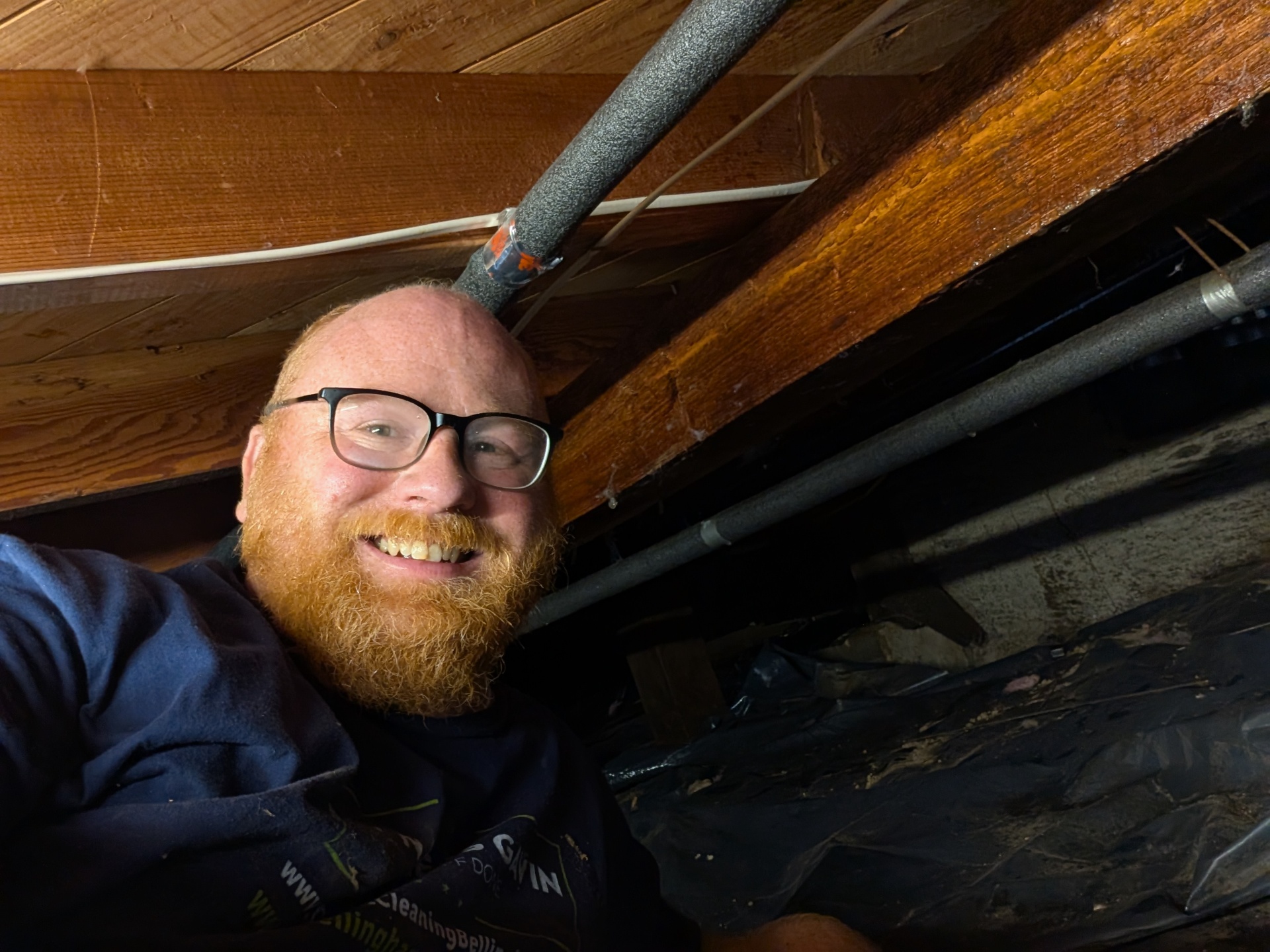
Rats usually get into a crawlspace through openings low on the house: torn or missing vent screens, gaps around pipes and wires, poorly fitted access doors and cracks in the foundation. Once inside, the crawlspace gives them shelter, insulation to nest in and quiet routes into the rest of the house.
Many Bellingham homes have vented crawlspaces, and our wet fall and winter weather pushes rodents toward dry shelter. Here is what makes a crawlspace attractive, where rats get in, and why trapping by itself rarely ends the problem.
Need help now? See our rat and mouse control service. In Bellingham, explore rat and mouse removal.
Why crawlspaces attract rats
A crawlspace is dark, dry compared to the yard, rarely disturbed and close to food. Insulation and vapor barrier make easy nesting material, and plumbing and wiring runs give rats protected paths along the floor framing.
Norway rats in particular like to burrow and travel low, which makes crawlspaces and foundations a natural fit. Roof rats and mice can use crawlspaces too, but they are also comfortable climbing into walls and attics.
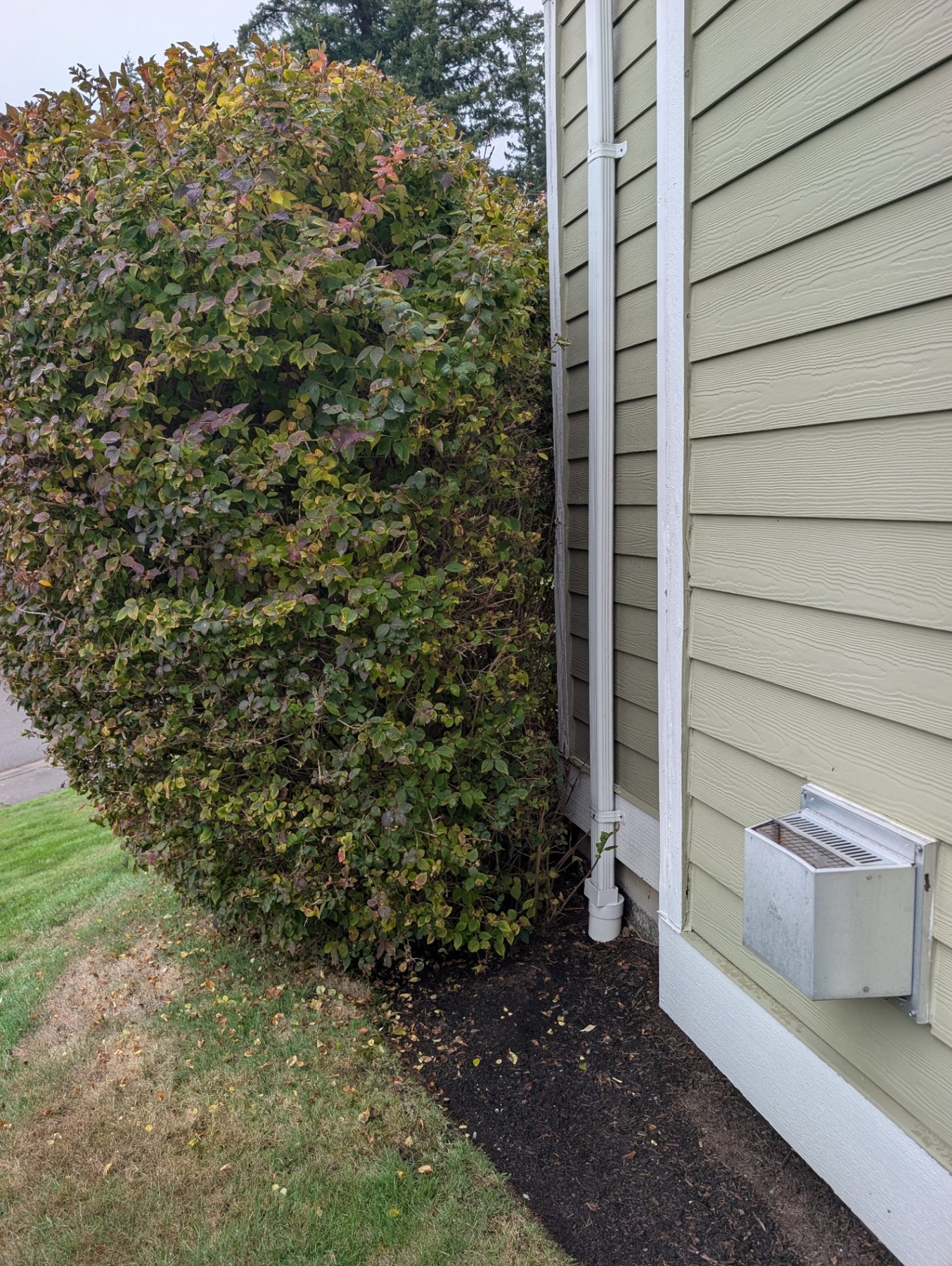
Common crawlspace entry points
Damaged or missing vent screens
Crawlspace vents are meant to let air through, not animals. Screens rust, get pushed in by pets or yard equipment, or get torn by animals working at them. Sometimes the screen was never installed at all. A torn vent is one of the most common ways in we find.
Gaps around pipes, wires and utility lines
Where water lines, drain pipes, gas lines, dryer vents and electrical conduit pass through the foundation or rim joist, there is often a gap left around them. A rat can fit through an opening about the size of a quarter, a mouse about the size of a dime.
Access doors and foundation openings
Crawlspace hatches that do not close tightly, warped wood doors and cracks or voids in the foundation all give rodents a way in. Gaps where siding meets the foundation are worth checking as well.
For a closer look, read our guide to finding rat entry points around your house.
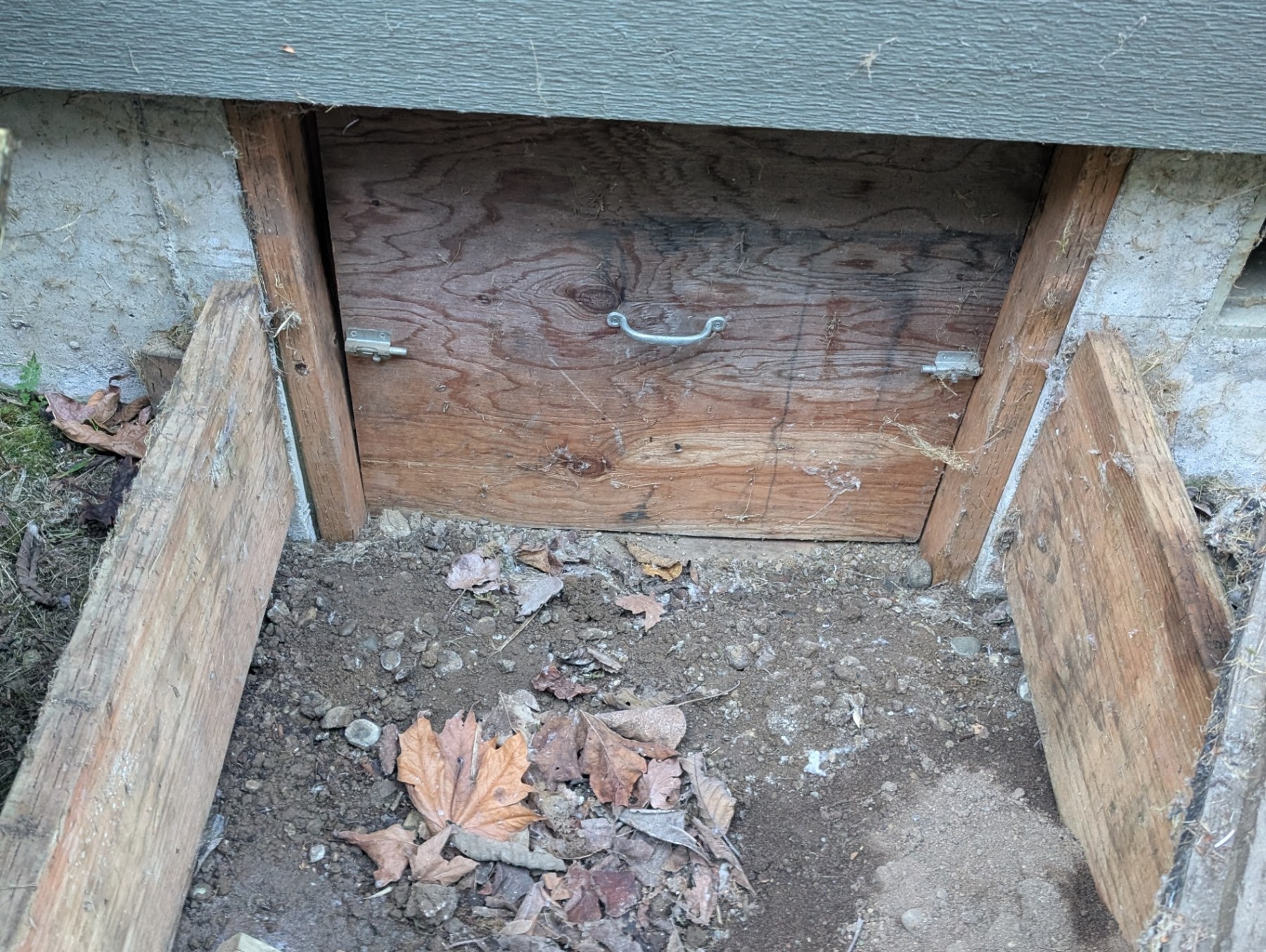
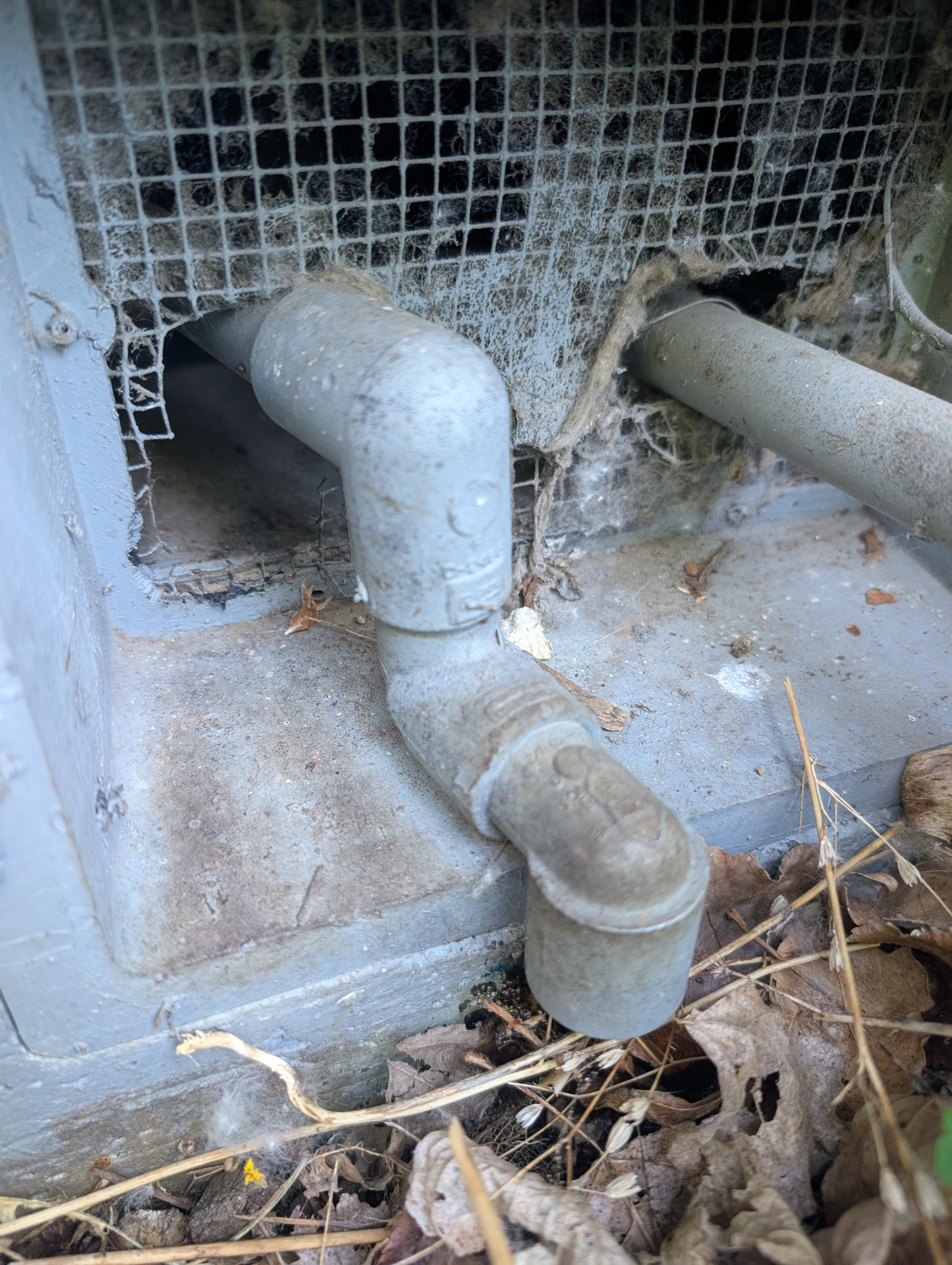
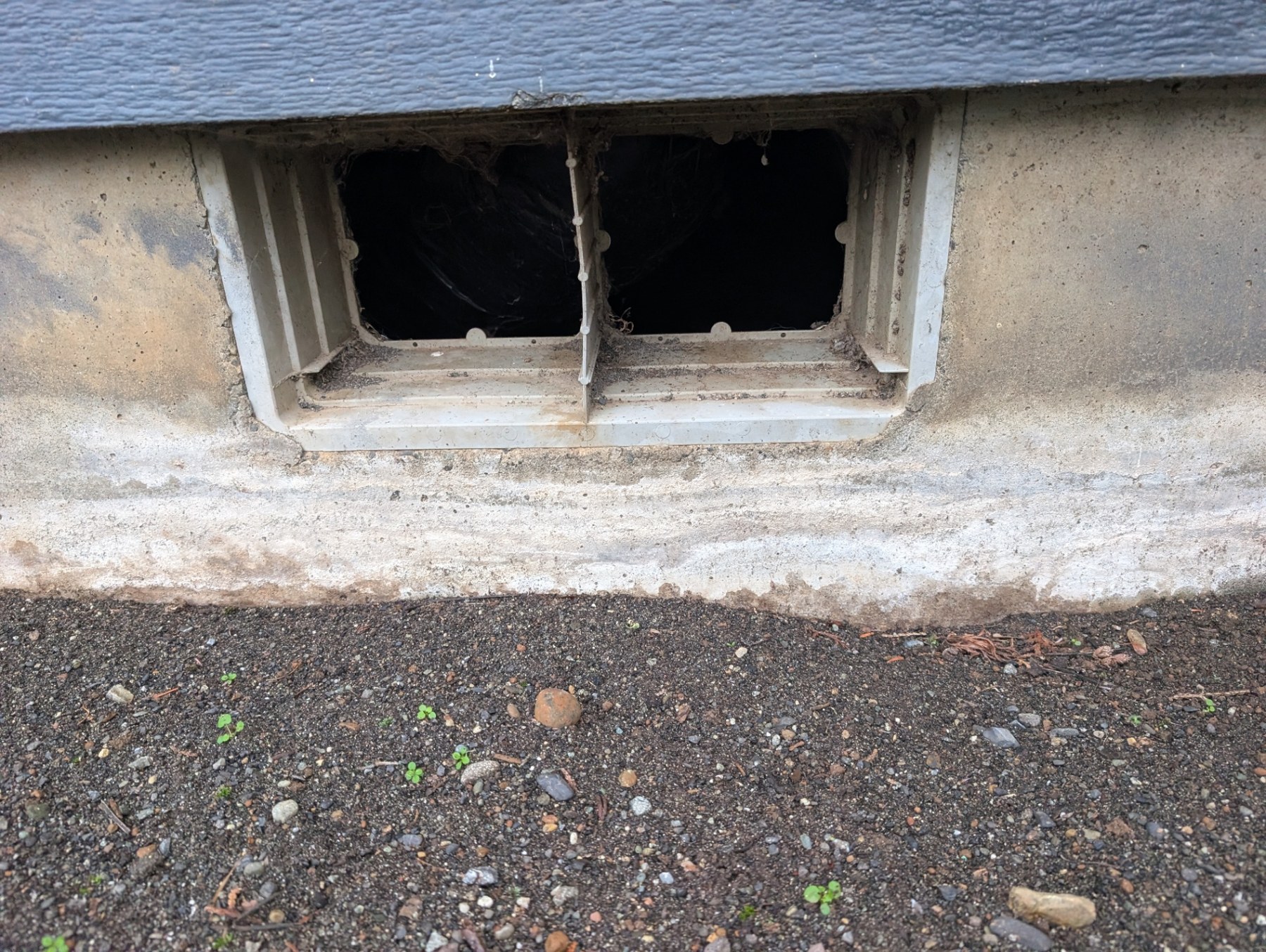
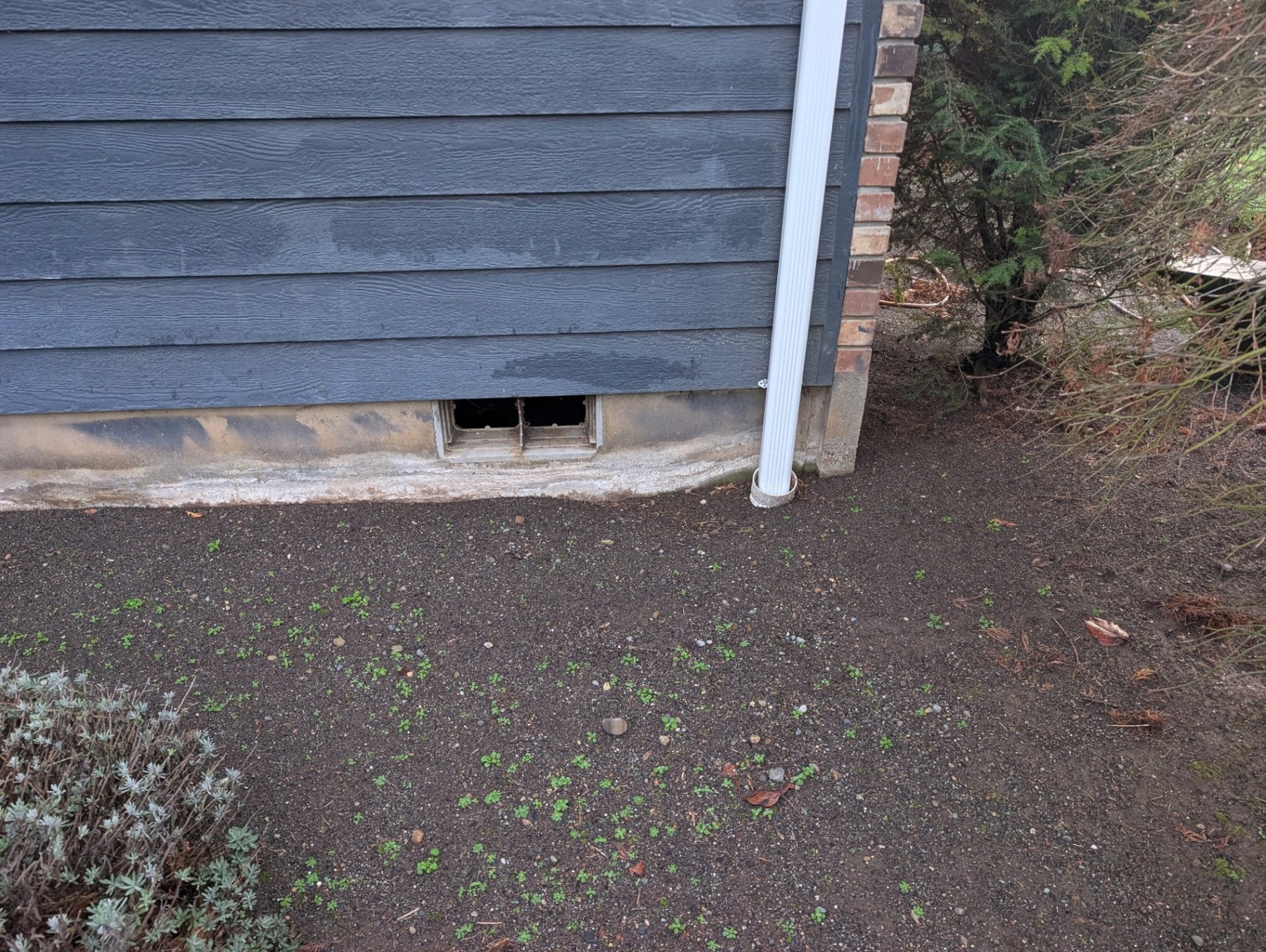
Look at the vents from the yard, then up close
A missing screen can be easy to overlook from a distance. Walk the full foundation perimeter, then inspect each vent closely for gaps, damage and missing screening.
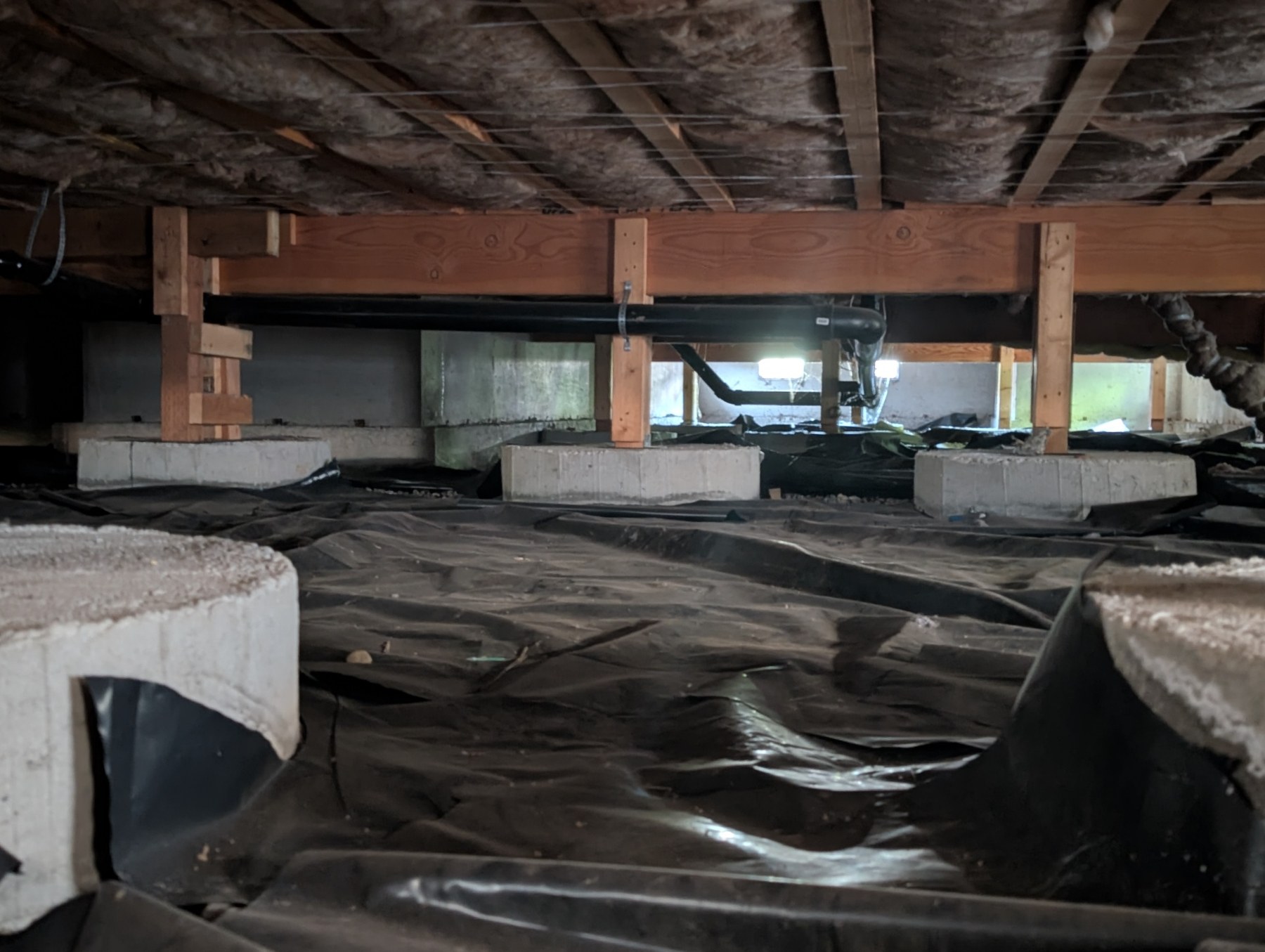
What a clean crawlspace looks like
A clean crawlspace makes inspection easier: exposed framing, accessible foundation edges and a tidy vapor barrier help fresh droppings or new damage stand out. A clean appearance alone does not prove that rodents are absent; entry points still need checking.
Damage rats cause under the house
- Flattened, torn or soiled insulation
- Pulled down or shredded vapor barrier
- Chewed wiring, which can create a fire risk
- Droppings and urine contamination on the vapor barrier and framing
- Odors that can rise into the living space
How rats move from the crawlspace into the house
The crawlspace is often just the starting point. Rats and mice follow plumbing and wiring up through gaps in the subfloor, behind cabinets, into wall cavities and sometimes all the way into the attic. That is why scratching in a wall or ceiling can trace back to an opening down at the foundation.
Why trapping alone may not solve it
Trapping removes the rats that are already inside. If the opening they used is still there, new rodents can find it and move in. Rodents also leave scent trails that help others find the same route.
Trapping is an important part of the job, but on its own it often leads to a cycle of catching a few, a quiet stretch, and then more activity.
How inspection and exclusion work together
A good crawlspace job usually combines several steps, adjusted to what the inspection finds:
- Inspect the exterior foundation, vents and utility penetrations
- Inspect inside the crawlspace for droppings, runways, nesting and damage
- Remove the rodents that are active with traps or bait as appropriate
- Seal and screen the confirmed and likely entry points with durable materials
- Follow up to confirm activity has stopped
See it on a real job
- Two doors, two problems: the crawl space vents that let everybody in · North Bellingham
- Rats along the green belt: a Cordata crawlspace inspection · Cordata, Bellingham
Frequently asked questions
How do I know if rats are in my crawlspace?
Common signs are scratching or movement noises under the floor at night, droppings near the crawlspace hatch or vents, damaged vent screens, and a musty or ammonia smell. A flashlight look through the hatch can show torn insulation or runways in the vapor barrier.
Can I just put a new screen on the vent myself?
You can, and it helps. Just keep in mind that a torn vent is often not the only opening, and sealing rodents inside a crawlspace without removing them can push them further into the house. An inspection helps make sure the whole picture is covered.
Do rats in the crawlspace mean I have rats in the walls?
Not always, but it is common for rodents to move from the crawlspace into walls along plumbing and wiring. Noises in the walls are a good reason to have the crawlspace checked.
Will you replace damaged insulation?
We focus on removing the rodents and stopping them from getting back in. For insulation cleanout and replacement we can point you to crawlspace and insulation contractors.
Related guides
View all pest & rodent guides →Finding signs of rats or mice?
G Green Inc. provides professional rodent inspections, removal and exclusion throughout Bellingham and Whatcom County. Call (360) 389-3599 to talk through the problem and schedule an inspection, or learn more about our rodent control service.