
Rats in the Attic: Signs, Damage and Removal
The most common sign of rats in the attic is scratching or scurrying overhead at night, followed by droppings, tunnels in the insulation and chewed materials. Rats usually get into attics through roofline gaps, damaged vents or by climbing up inside the walls from below.
Here is how to recognize attic rodent activity, why it matters which animal you have, and what professional removal involves.
Need help now? See our rat and mouse control service. In Bellingham, explore rat and mouse removal.
Signs of rats in the attic
- Scratching, scurrying or rolling noises, mostly at night
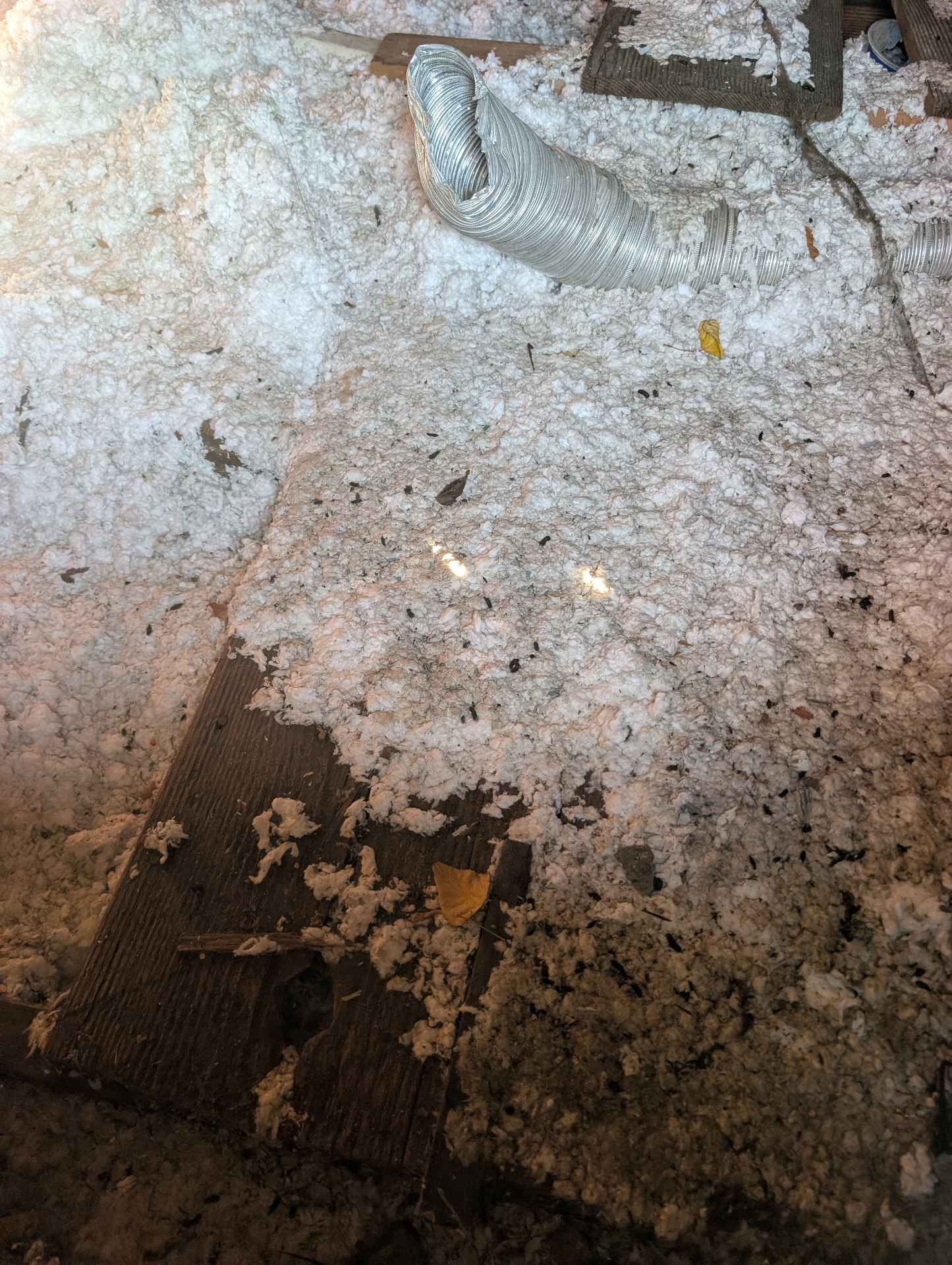
- Droppings on insulation, along framing or near the attic hatch
- Urine staining and odors
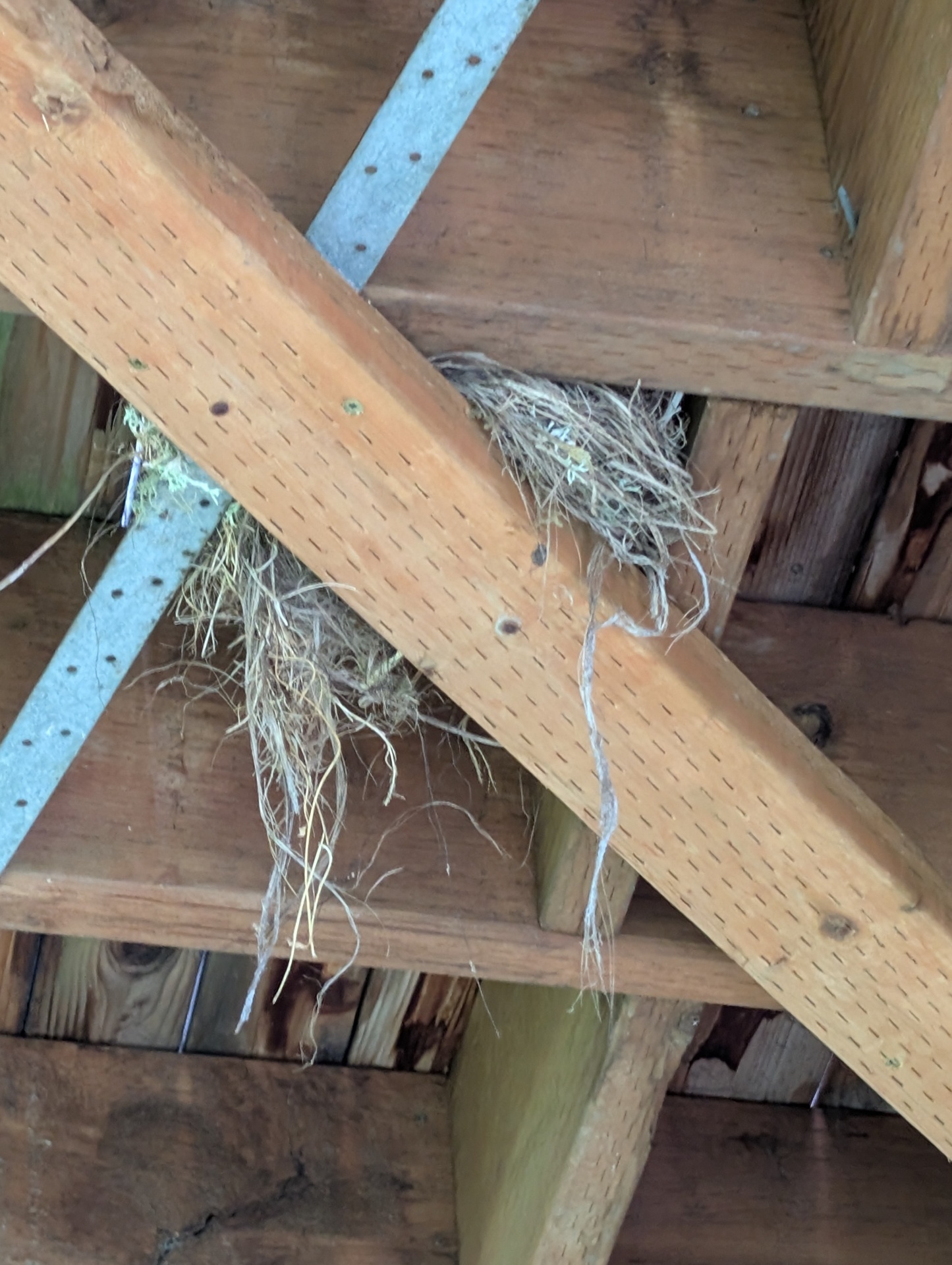
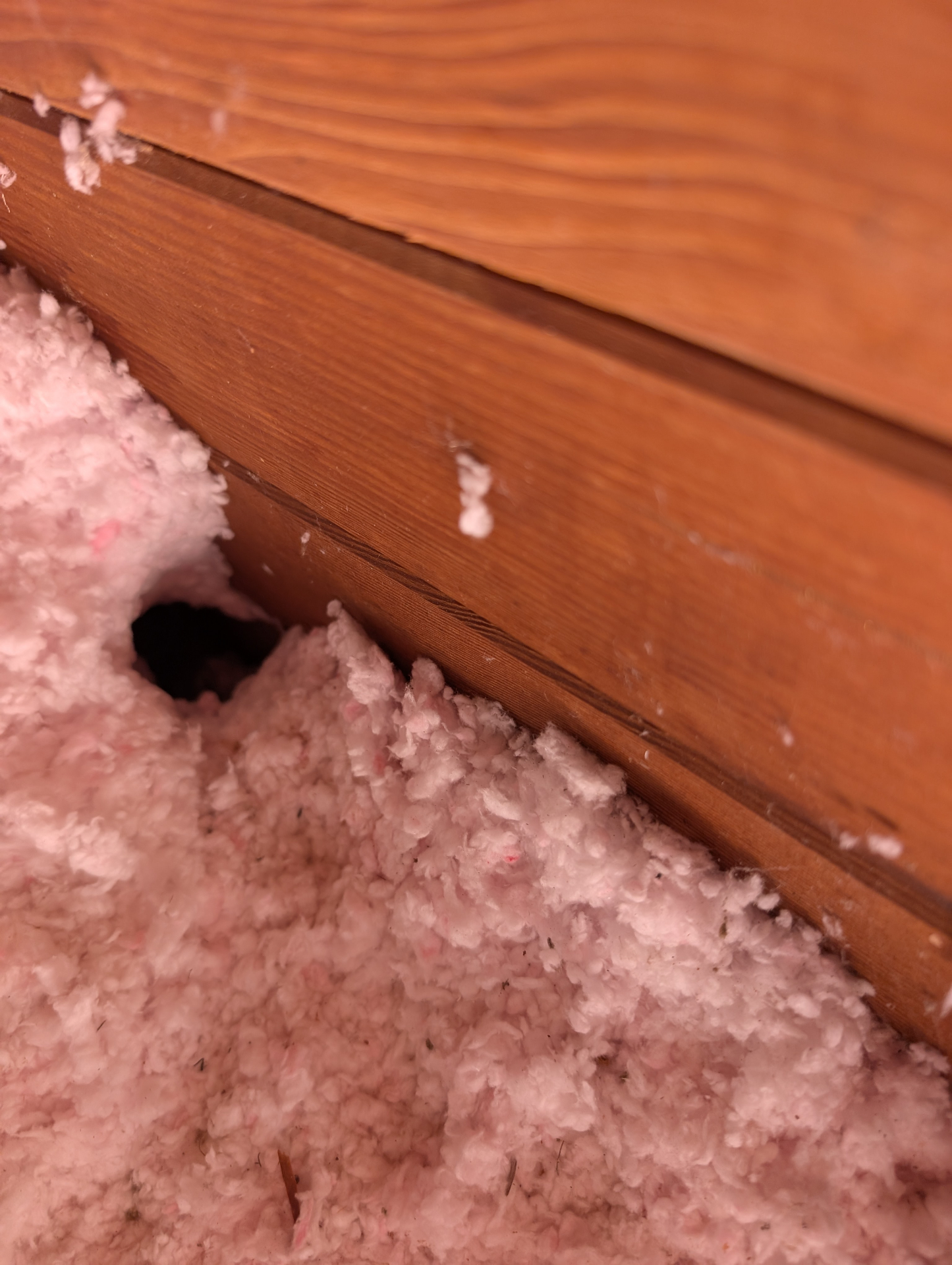
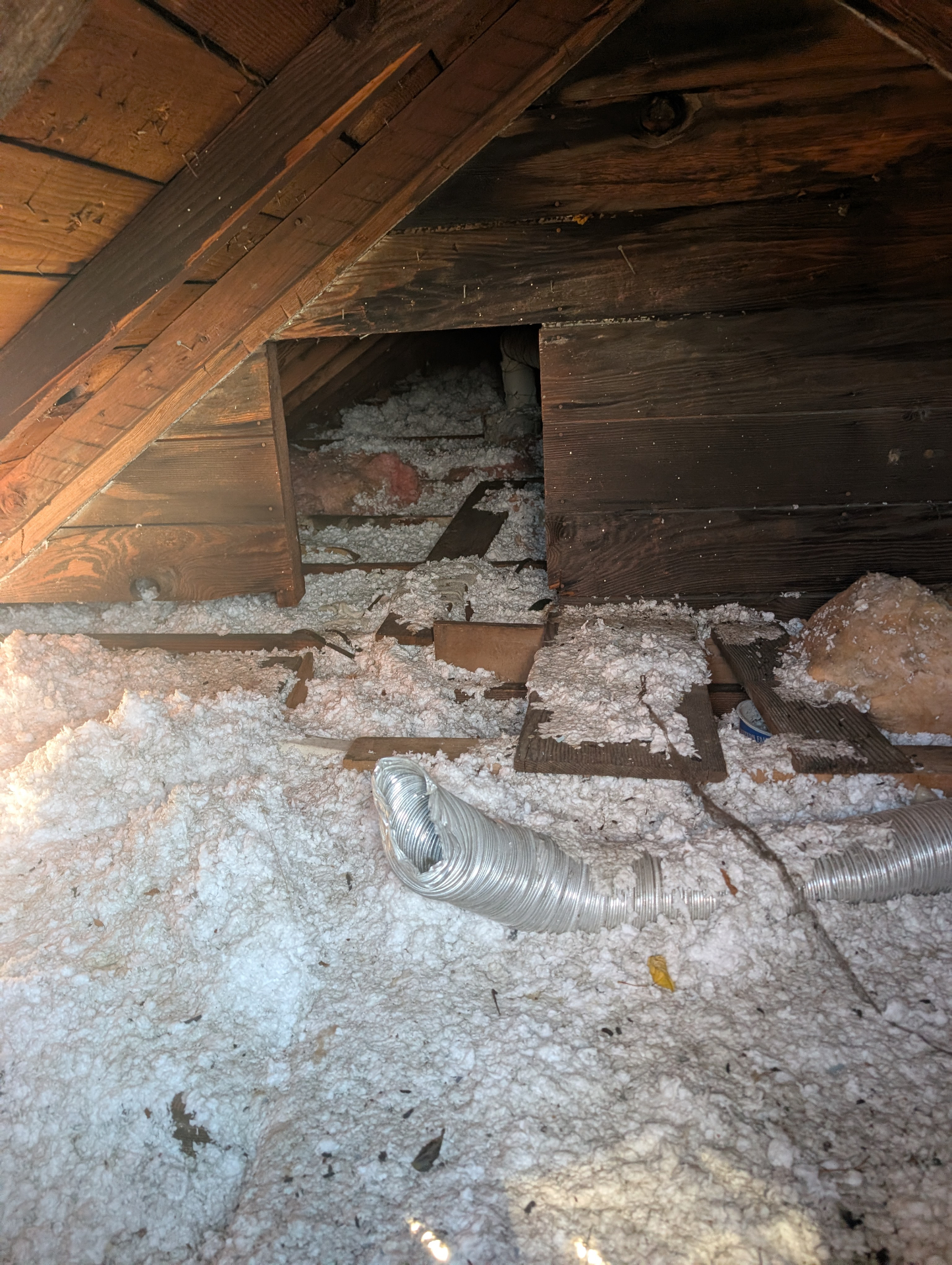
- Nesting material and tunnels or flattened areas in insulation
- Chewed wiring, ducting, wood or stored items
The damage attic rats cause
Rats chew constantly. In an attic that can mean chewed electrical wiring, which is a real fire concern, damaged duct work and holes in stored boxes. Droppings and urine contaminate insulation and can leave lasting odors.
When insulation is heavily soiled, it may need additional attention after the rodents are removed.
How rats get into attics
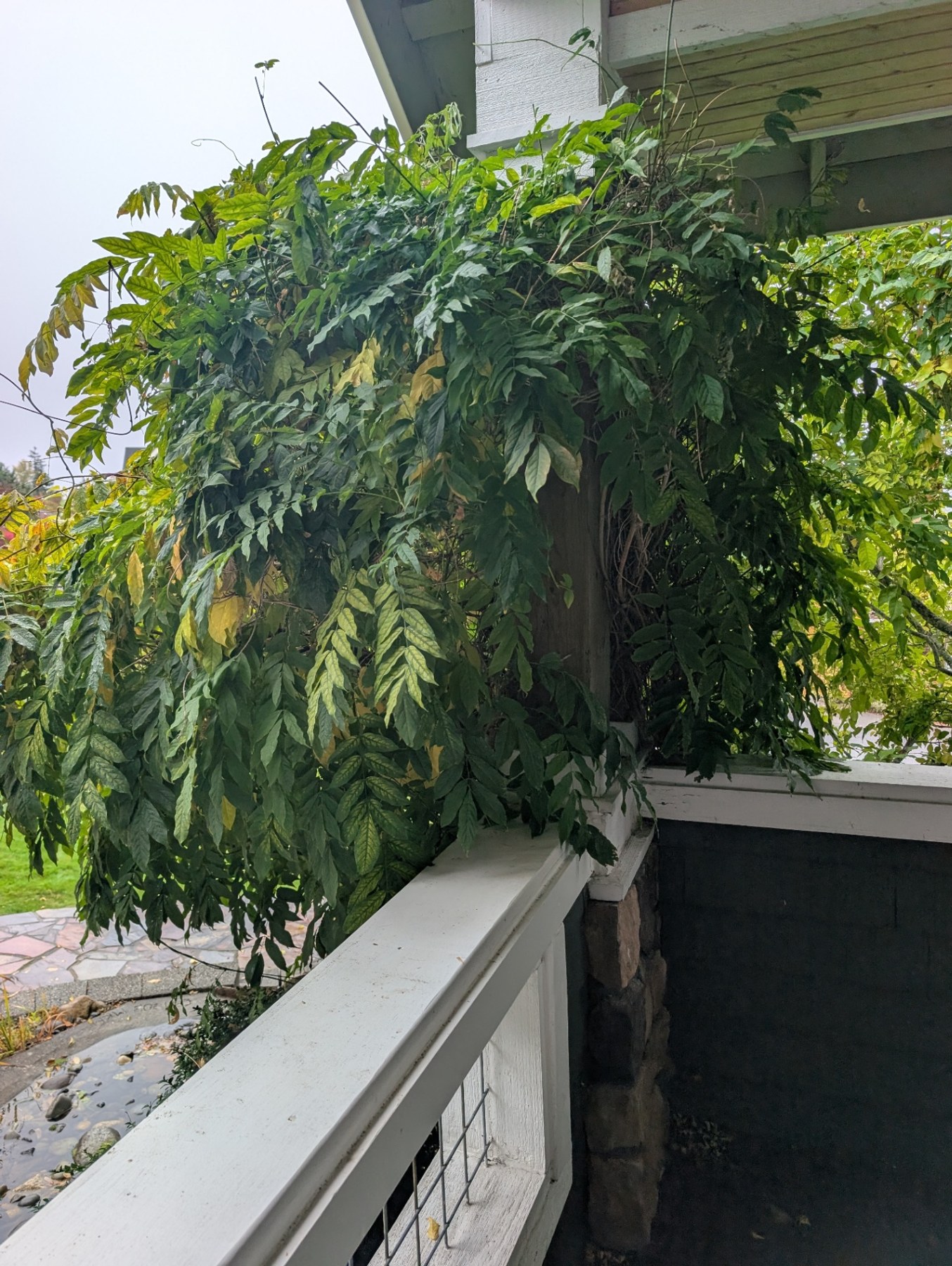
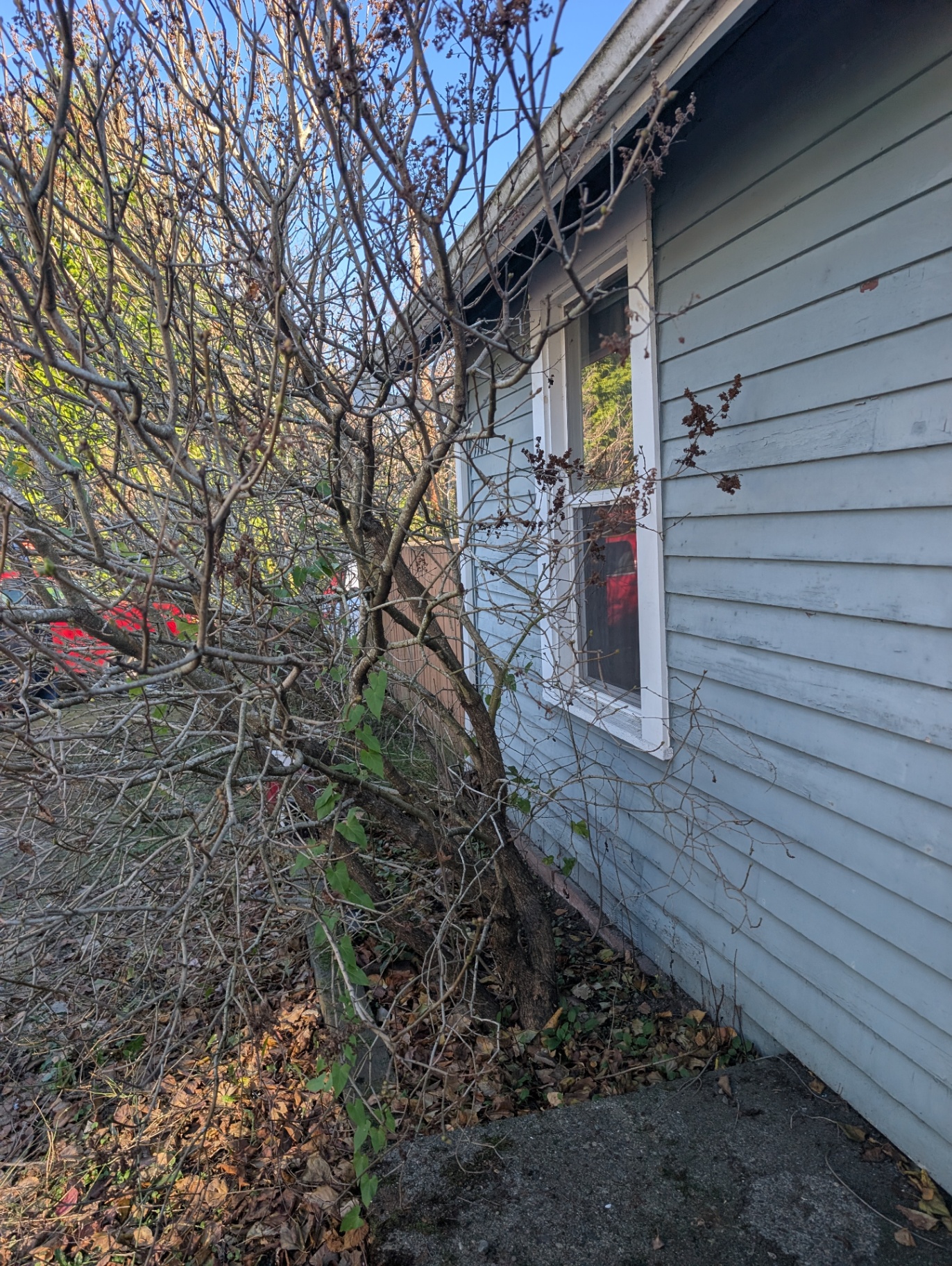
Roof rats are good climbers and often come in high: roof junctions, gaps at the soffit, damaged gable or roof vents, and spots where branches touch the roof. Rats and mice can also climb up through wall cavities from a crawlspace.
For a closer look, read our guide to finding the openings rats use to enter a house.
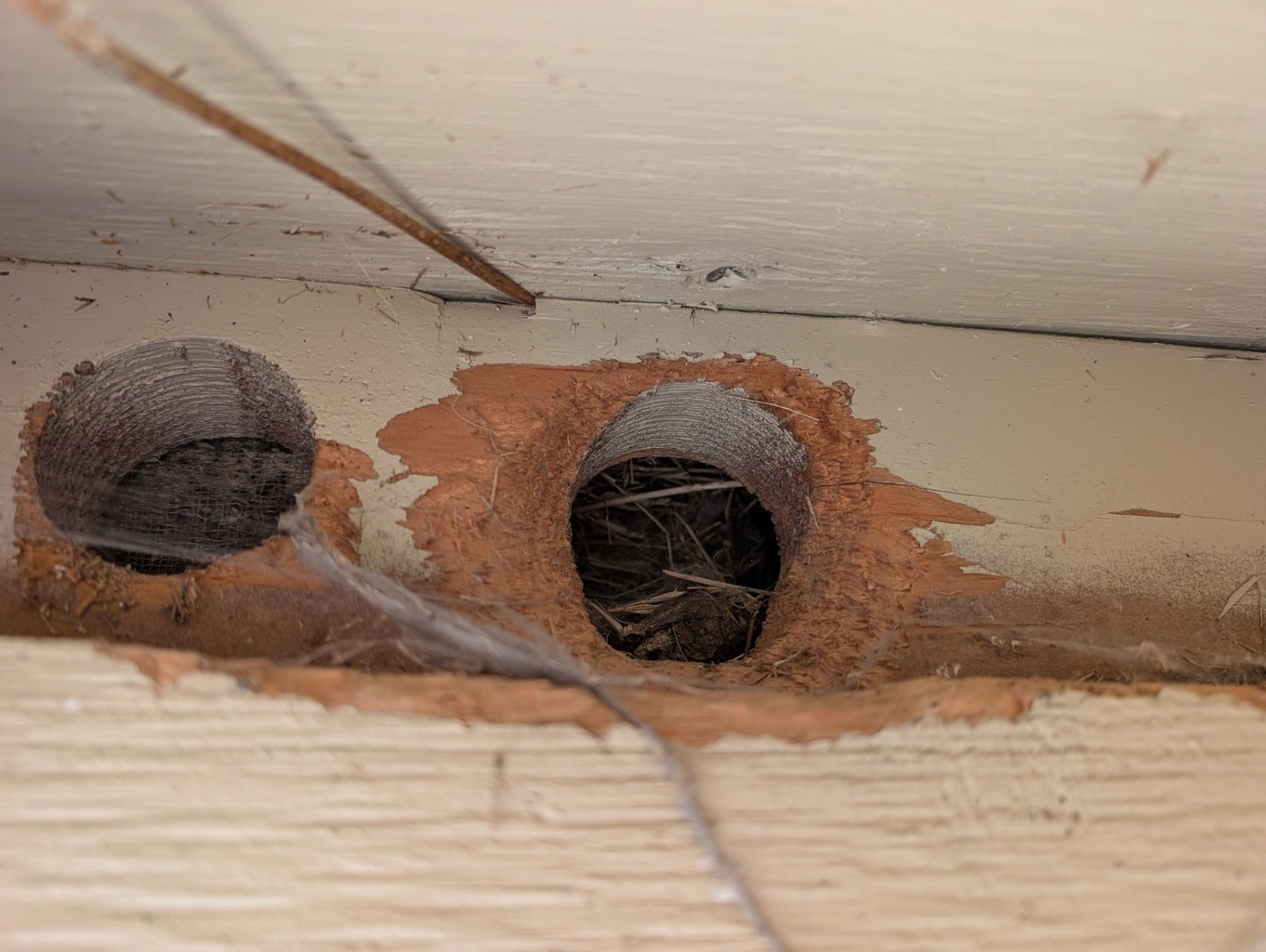
Chewed attic vent screening
Inspect screening at soffit and attic vents as well as larger roofline gaps. Damaged mesh can leave access behind an otherwise intact vent. Chewing alone does not identify the animal; compare the opening with other signs and camera evidence.
Rats or squirrels?
Timing is a good clue. Rats are mostly active at night. Squirrels are active during the day, often early morning and late afternoon, and tend to sound heavier. Squirrels also chew larger openings at vents and roof edges.
Identifying the animal matters because the removal method and the repair are different. Squirrels may need a one-way door rather than traps, and the screening has to stand up to stronger chewing.
How professional attic rodent removal works
- Inspect the attic, roofline and walls to find activity and entry points
- Remove the rodents with traps placed along their travel routes
- Seal and screen the entry points once activity is under control
- Follow up to confirm the attic is quiet
- Point out contaminated areas that may need cleanup or insulation work
See it on a real job
- Squirrels chewed a door into the attic. We installed a screen door. · Puget, Bellingham
Frequently asked questions
Will rats in the attic leave on their own?
Rarely. An attic with insulation and access to food nearby is good shelter, and rats tend to stay and breed.
Is it dangerous to go in the attic if I have rats?
Avoid touching droppings or nesting material bare-handed and avoid stirring up dust. Take a few photos from the hatch and text them over instead.
Can you tell if it is rats or squirrels from a photo?
Often, yes. Droppings, chew marks and the size of an opening say a lot. Text a photo and we can usually give you a good idea.
Do you replace attic insulation?
We remove the rodents and seal them out. For insulation removal and replacement we can refer you to insulation contractors.
Related guides
View all pest & rodent guides →Finding signs of rats or mice?
G Green Inc. provides professional rodent inspections, removal and exclusion throughout Bellingham and Whatcom County. Call (360) 389-3599 to talk through the problem and schedule an inspection, or learn more about our rodent control service.